

A significant weather disturbance is developing over the North Atlantic, with the US East Coast expected to experience increasingly severe conditions over the coming days.
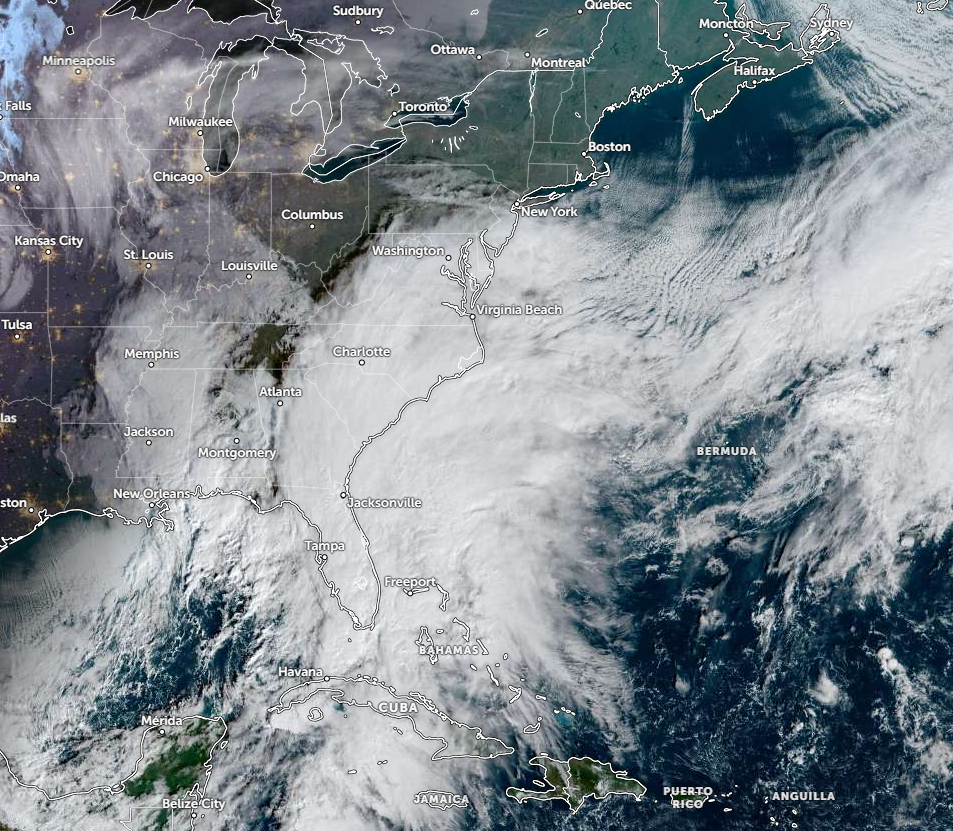
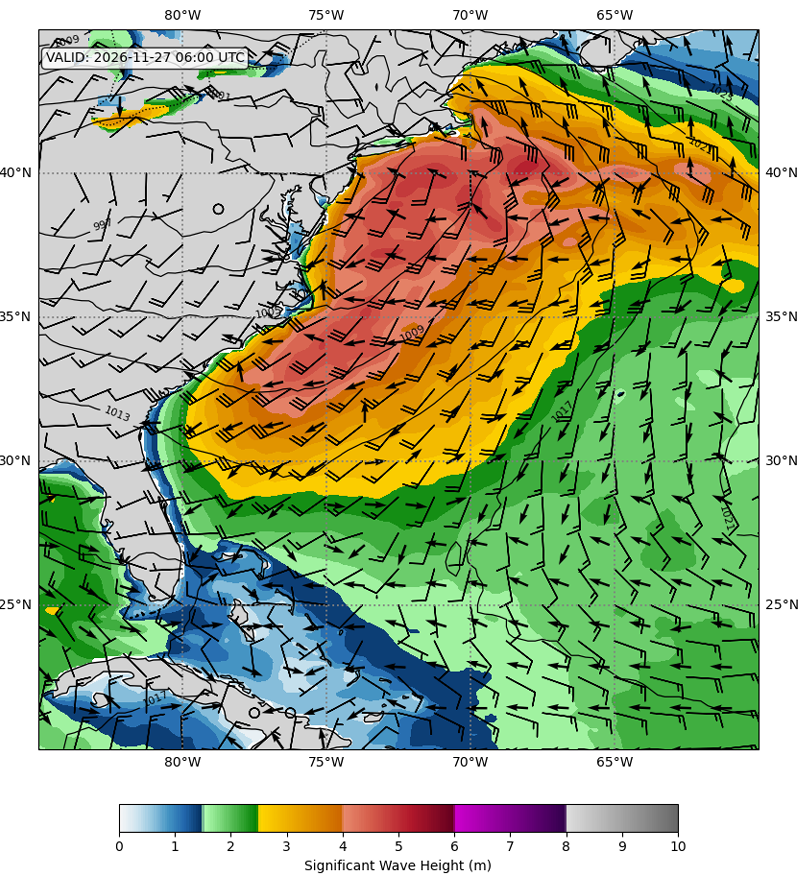
The developing system is driven by the interaction between two major atmospheric features, a high-pressure system currently centered near Montreal, close to the US–Canada border, and a low-pressure system positioned near western Cuba. The pronounced pressure gradient between these systems is already generating strong easterly winds off the coast of North Carolina, accompanied by rough seas and wave heights of 4–5 meters along parts of the eastern US coastline.
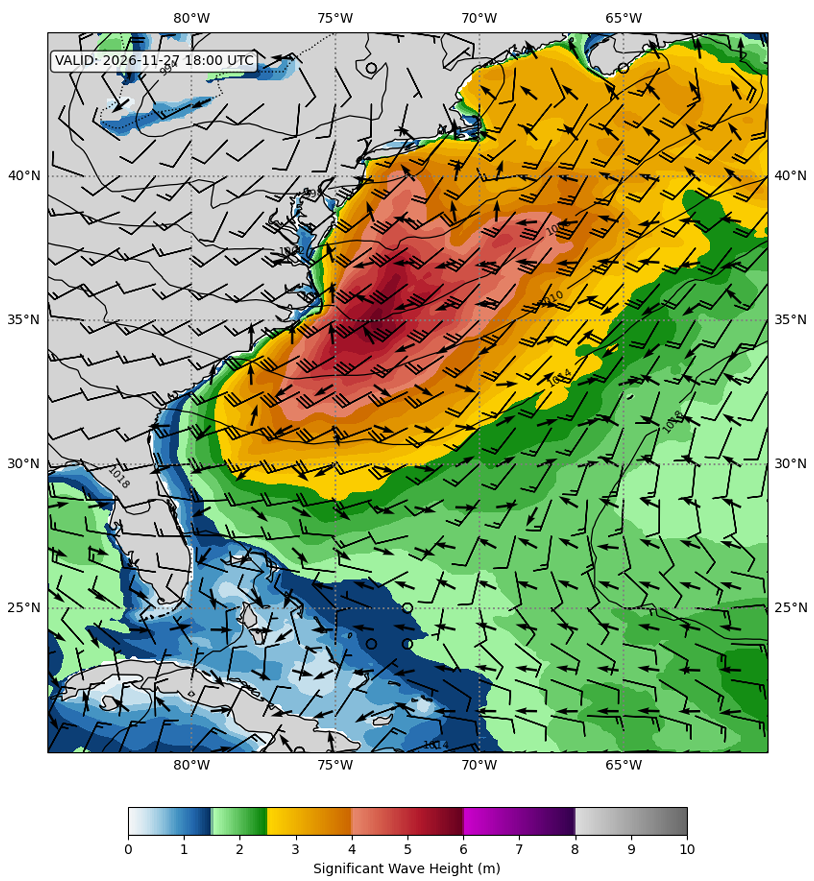
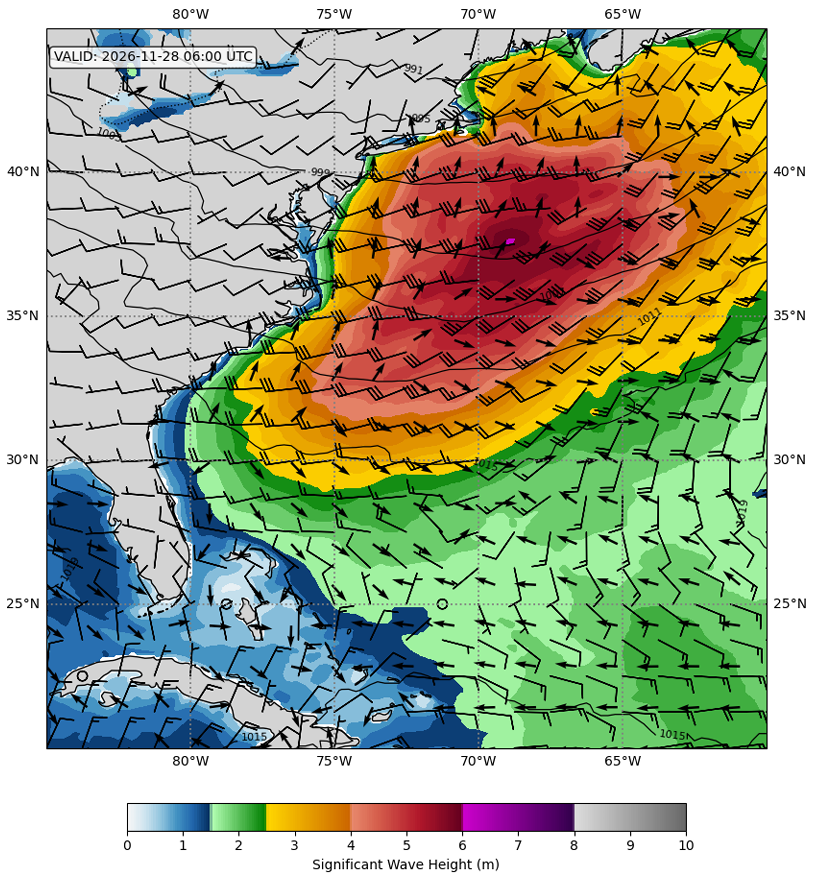
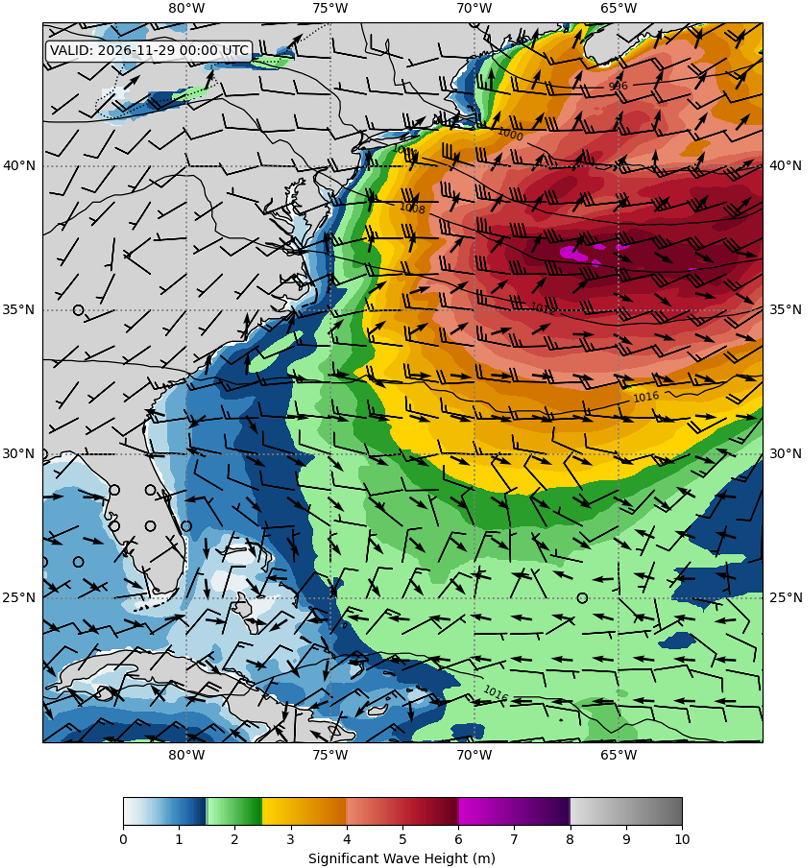
The high-pressure system is currently moving eastward towards the Atlantic, while the low-pressure system is forecast to track northward towards Florida and deepen further. This evolution is expected to intensify the pressure gradient, resulting in stronger winds and increasingly hazardous sea conditions as seen in the below charts generated from our software.
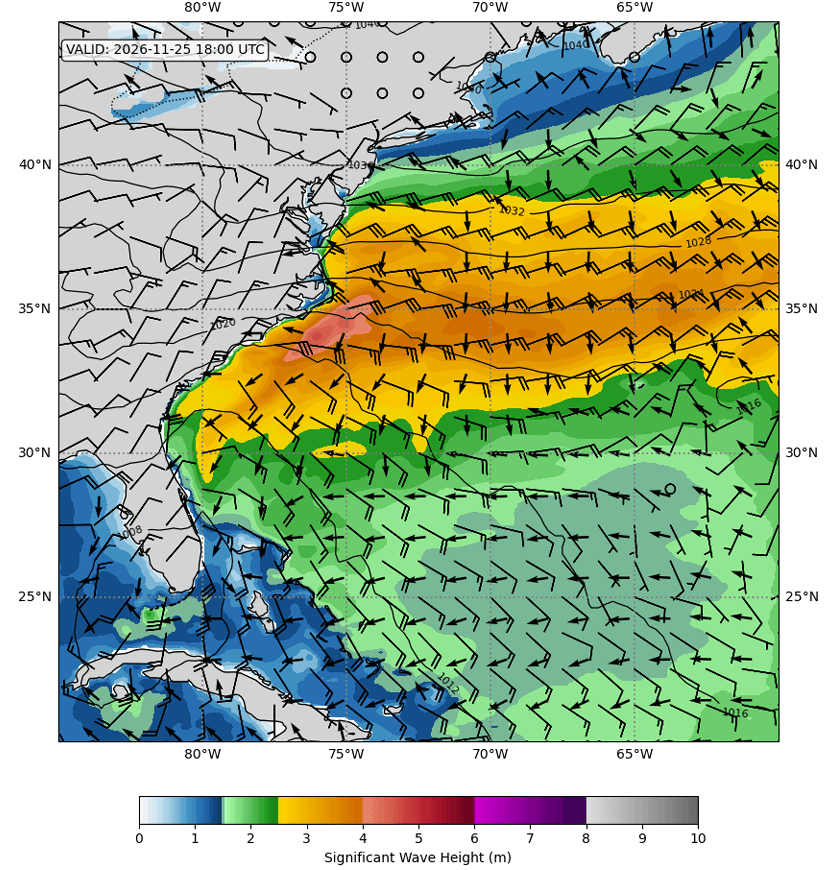
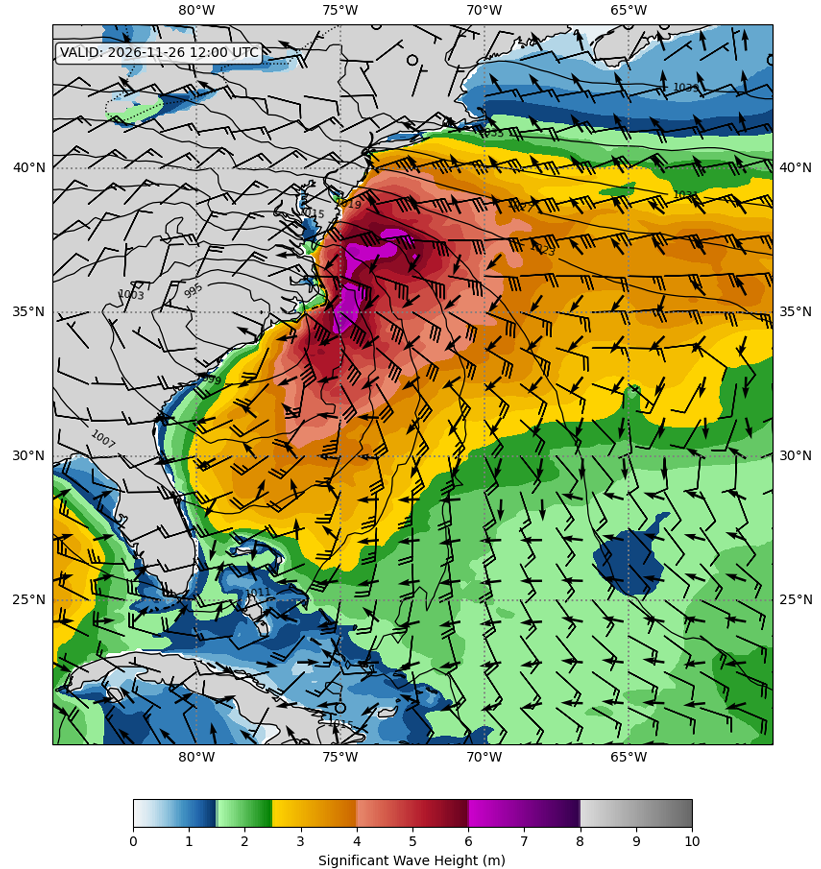
Conditions Expected on 26 November
By 26 November at 12:00 UTC, the low-pressure center is forecast to reach the vicinity of Charleston, South Carolina, with central pressure dropping to approximately 992 hPa.
The system is expected to generate storm-force winds, reaching 8–9 Beaufort (approximately 40–50 knots), while significant wave heights may exceed 6 meters along the affected coastal and offshore areas.
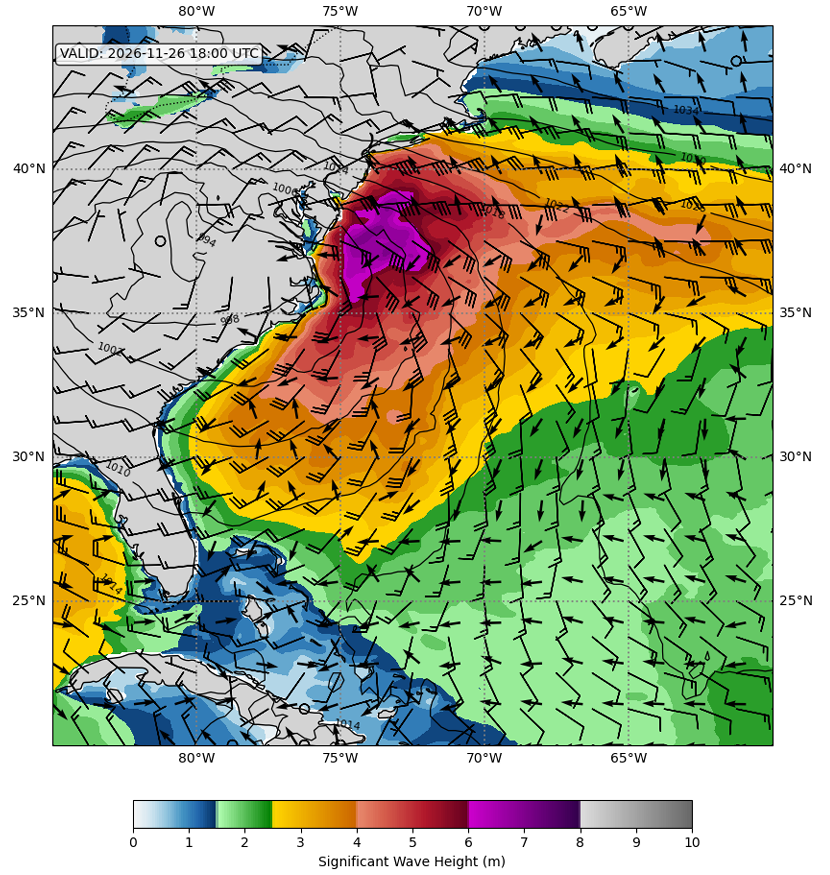
Expected Duration and Operational Impact
The adverse weather conditions are expected to persist through 29 November, with gradual improvement forecast thereafter.
Throughout this period, vessels navigating the affected region should closely monitor weather developments and allow for potential changes to their voyage plans. Particular attention should also be given to port operations, as strong winds and high seas may disrupt vessel arrivals, departures, berthing activities and cargo-handling operations at major ports along the US East Coast.
Timely weather monitoring and route assessment will be essential to maintaining navigational safety and minimizing operational delays.